
Moroccan Cuisine: Tagine, Couscous, and the Secrets of Traditional Food
Moroccan cuisine is considered one of the most diverse in the Arab world, blending various cultural influences with local traditions.
Traditional Moroccan food is distinguished by its delicious and flavor-rich dishes, such as Tagine and Couscous, which are among the most famous Moroccan meals.
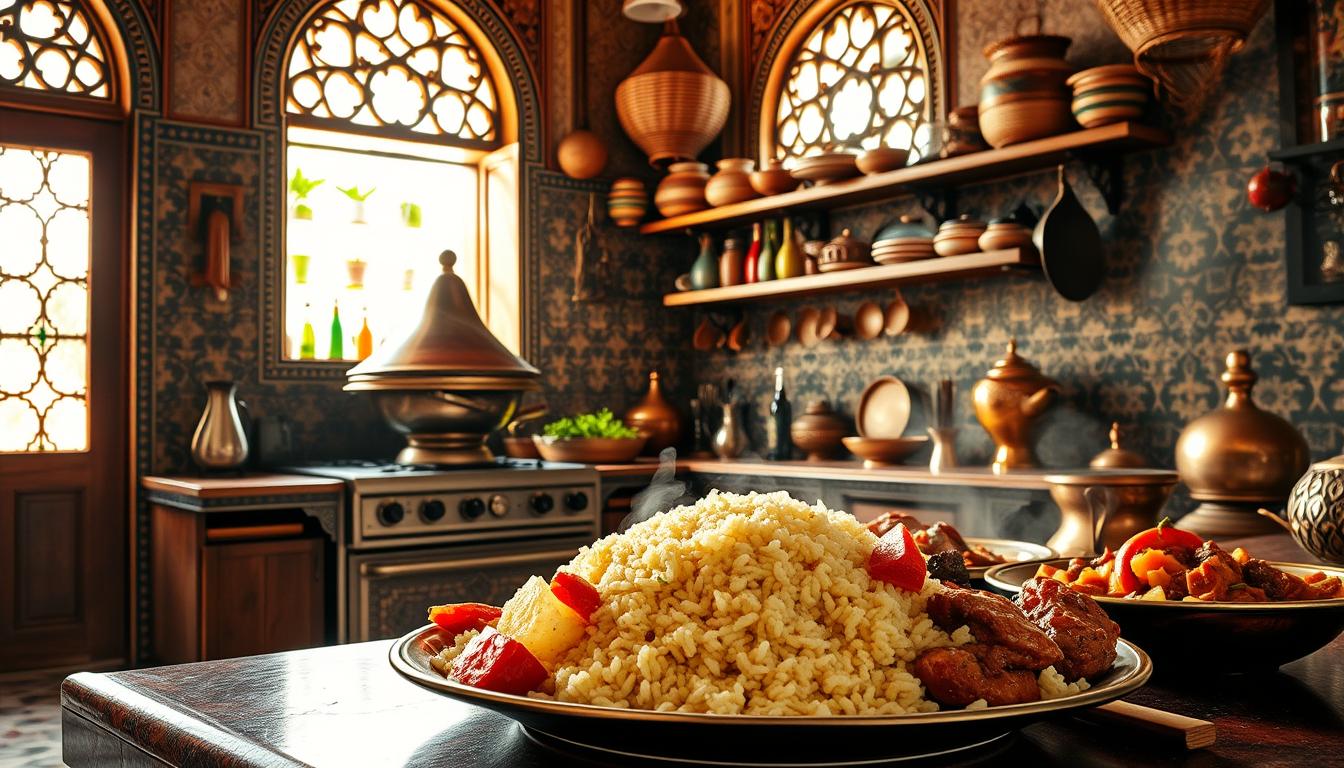
In this article, we will explore the history of Moroccan cuisine and its cultural influences, focusing on the secrets of traditional Moroccan food.
Key Takeaways
- Moroccan cuisine blends various cultural influences.
- Tagine and Couscous are among the most famous Moroccan dishes.
- Traditional Moroccan food is rich in flavors and spices.
- Cultural influences play a crucial role in shaping Moroccan cuisine.
- Moroccan cuisine is distinguished by its diversity and richness.
The History of Moroccan Cuisine and its Cultural Influences
Moroccan cuisine has been influenced by numerous civilizations and cultures, leading to its diversity and richness. This diversity is not only a result of Morocco's geographical location between Europe and Africa but also its long history as a center for trade and cultural exchange.
The Roots of Moroccan Cuisine Through the Ages
The history of Moroccan cuisine dates back to ancient times, influenced by the civilizations that succeeded one another in Morocco. Starting with the Amazigh, who introduced ingredients like dates and olives, to the Arab conquests that brought new spices and advanced cooking techniques.
Amazigh, Arab, and Andalusian Influences
Moroccan cuisine has been significantly influenced by Amazigh, Arab, and Andalusian cultures. Each of these cultures introduced unique ingredients and cooking methods to Moroccan cuisine.
Key Ingredients Introduced by Each Cultural Influence
- Amazigh Influence: The Amazigh introduced ingredients like dates, almonds, and olives, which are essential components in many Moroccan dishes.
- Arab Influence: The Arabs brought new spices such as saffron, cumin, and turmeric, and introduced advanced cooking techniques.
- Andalusian Influence: The Andalusian migration influenced Moroccan cuisine by introducing sweet and sour flavors and methods of food presentation.
These combined influences have made Moroccan cuisine a unique and flavor-rich blend of traditions.
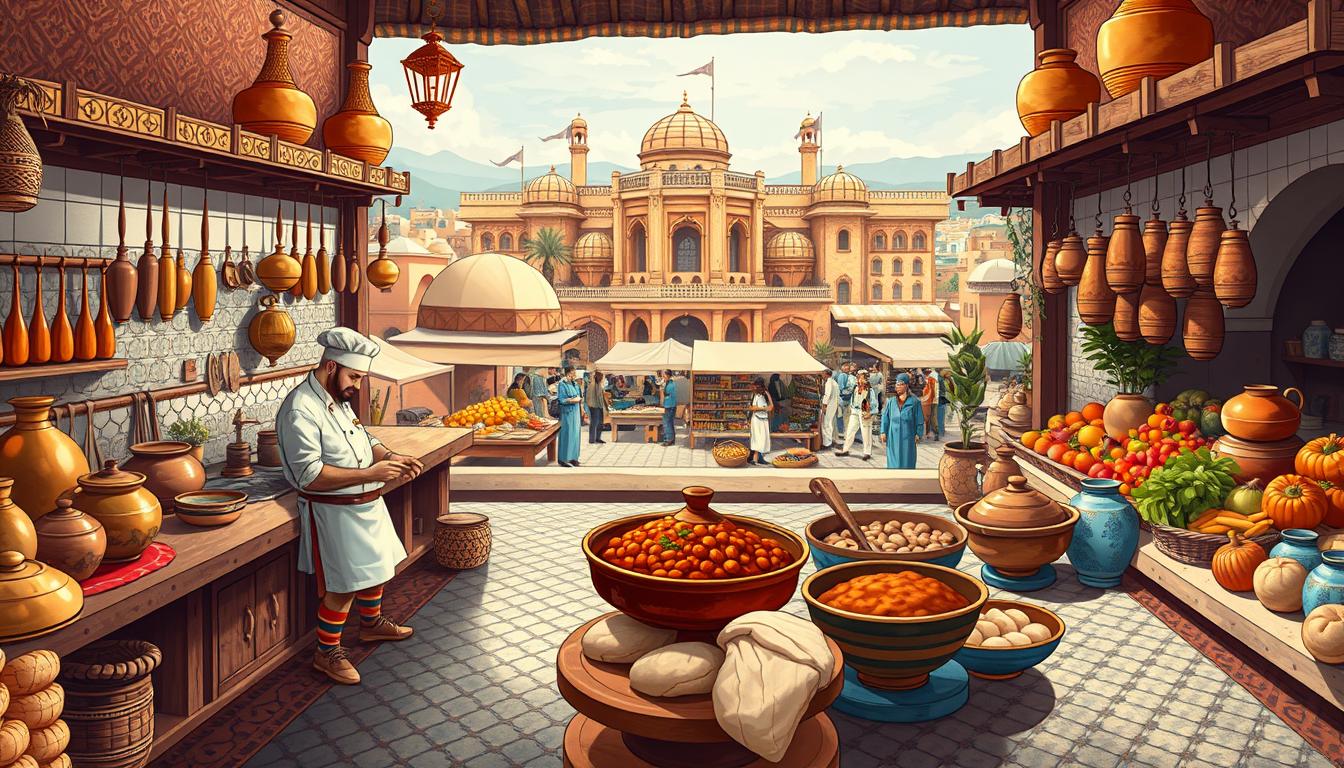
Moroccan Cuisine – Tagine, Couscous, and the Secrets of Traditional Food
Moroccan cuisine is distinguished by its diversity and richness, where slow cooking blends with deep flavors to create a unique culinary experience. This cuisine is an integral part of Moroccan culture, with traditional dishes playing a vital role in social occasions and celebrations.
The Global Stature of Moroccan Cuisine
Moroccan cuisine enjoys a prestigious status on the global stage, blending various cultural influences that reflect Morocco's rich history. Tagine and Couscous are among the most famous Moroccan dishes that attract food lovers from all over the world.
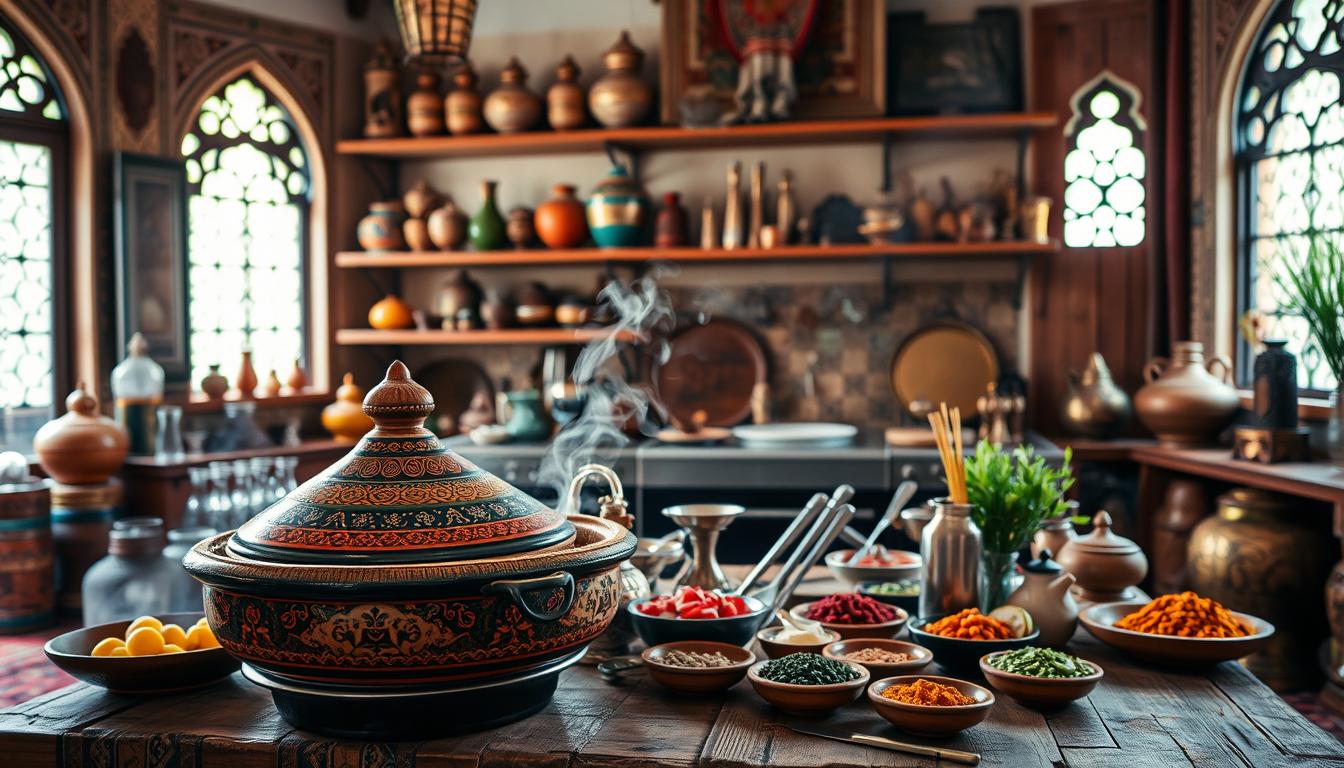
Distinctive Characteristics of Moroccan Cuisine
Moroccan cuisine is characterized by several features that make it unique. Among the most prominent are:
- Slow cooking that allows flavors to deepen and meld.
- The use of spices and herbs in innovative ways.
- Diversity in the use of meats and vegetables.
Slow Cooking and Deep Flavors
Slow cooking is one of the secrets behind the success of Moroccan dishes. By simmering over low heat for long periods, flavors penetrate the food, creating a rich and harmonious taste. This cooking method is clearly evident in dishes like Tagine, where ingredients are cooked slowly to deliver a meal with integrated flavors.
Tagine: The Story of Morocco's Most Famous Dish
Tagine holds a special place in Moroccan culture, symbolizing hospitality and heritage. The origins of this dish trace back to a long and diversely influenced history.
The Origin and History of Tagine
Tagine is a traditional dish dating back to the Middle Ages, influenced by the various cultures that have passed through Morocco, including Arab, African, and Amazigh cultures. Tagine is a symbol of the region's cultural diversity.
Types of Tagine Pots and How to Use Them
Tagine pots vary between clay and metal, each with different usage methods.
- Clay Tagine: Characterized by its ability to distribute heat evenly, often used for slow cooking.
- Metal Tagine: Made from materials like steel or aluminum, known for its fast heat conduction.
The Difference Between Clay and Metal Tagines
Clay tagines retain flavors better, while metal tagines cook faster. Both can be used to prepare various recipes.
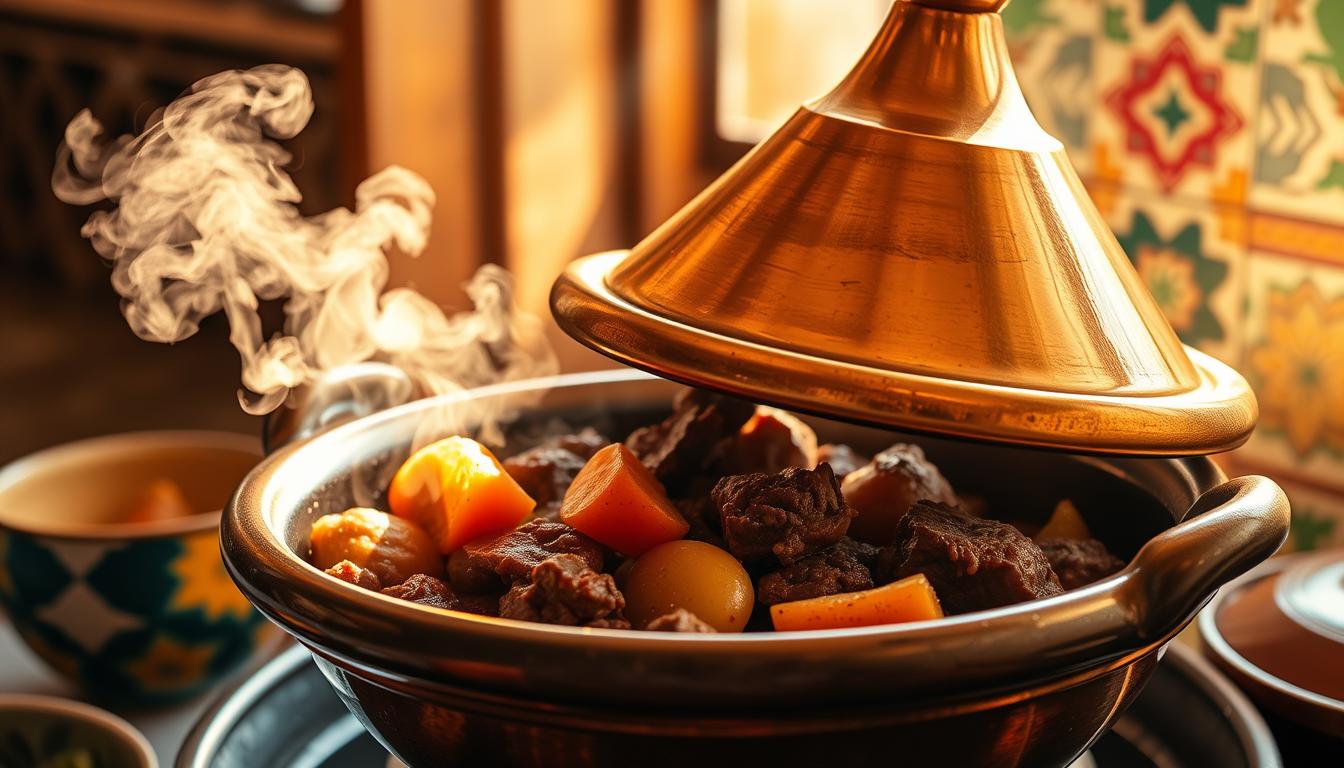
The tagine is used to prepare many delicious dishes and is an integral part of traditional Moroccan cuisine.
The Most Famous Types of Moroccan Tagine
Tagine recipes in Morocco are diverse, making it a favorite dish for many. Moroccan tagine is distinguished by the variety of its ingredients and preparation methods, reflecting the country's cultural and dietary diversity.
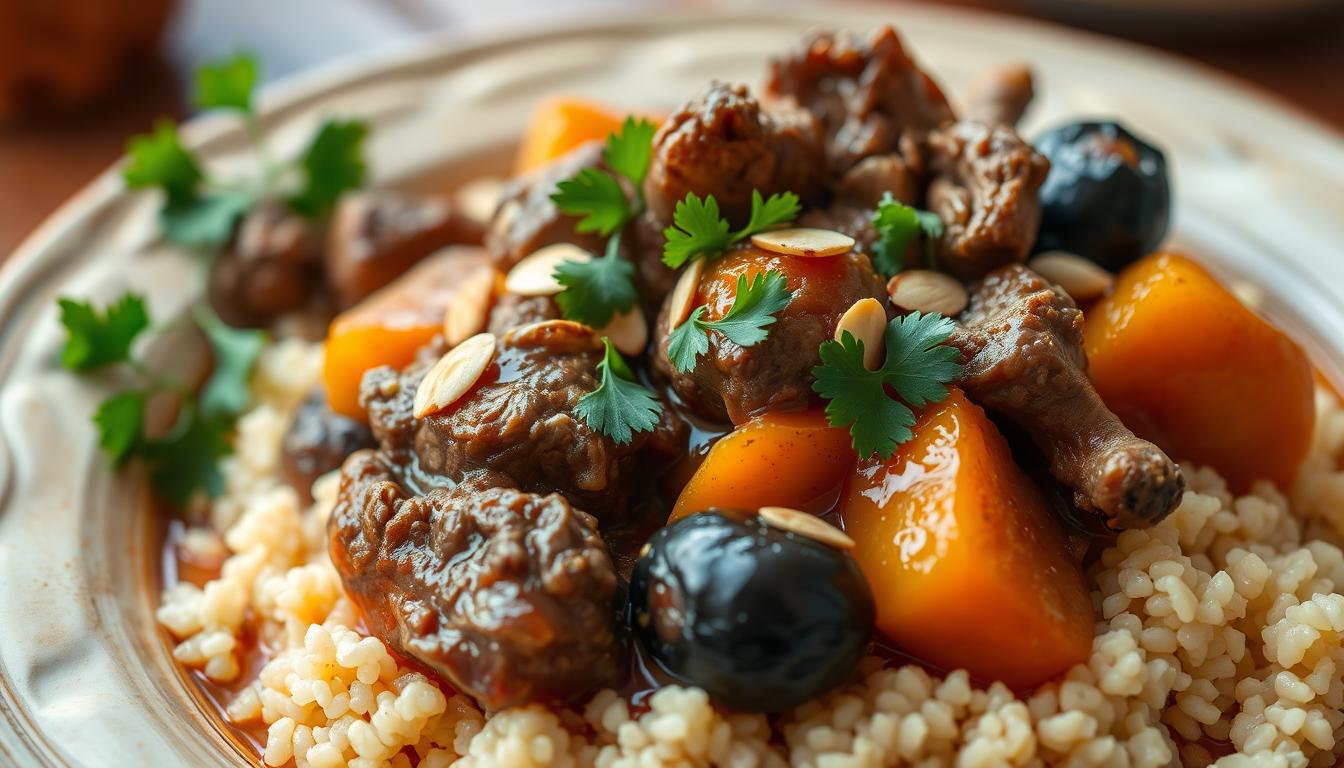
Meat Tagine with Prunes and Apricots
Meat Tagine with prunes and apricots is a delicious dish that combines the rich flavor of meat with dried fruits. This dish is prepared using meat cuts, prunes, apricots, and distinctive spices. It is an ideal dish for special occasions, served with rice or bread.
Chicken Tagine with Olives and Preserved Lemon
Chicken Tagine with olives and preserved lemon is a delicious dish combining the tender flavor of chicken with spicy seasonings. This dish is prepared using chicken, olives, preserved lemon, and spices. It is an excellent choice for lunch or dinner.
Fish and Vegetable Tagine
Fish and Vegetable Tagine is a healthy and delicious dish, consisting of fresh fish and seasonal vegetables. It is prepared using various types of fish and vegetables like potatoes and carrots. This dish is ideal for those seeking light and healthy meals.
Distinctive Regional Recipes from Different Parts of Morocco
Tagine recipes vary from one region to another in Morocco, reflecting the country's cultural and culinary diversity. Some regions add hot spices, while others add dried fruits or nuts. These variations make each tagine dish unique.
- Meat Tagine with Prunes and Apricots
- Chicken Tagine with Olives and Preserved Lemon
- Fish and Vegetable Tagine
Couscous: The National Dish and the Secrets of its Preparation
Moroccan Couscous is a complete meal that combines authenticity and simplicity in preparation. Couscous is one of the main dishes in Morocco, prepared using traditional methods passed down through generations.
The History and Cultural Importance of Couscous
The history of couscous dates back to ancient times, originally made from durum wheat semolina. Couscous represents an integral part of Moroccan culture, served on special and family occasions.
Couscous is a symbol of Moroccan hospitality, forming part of the deep-rooted traditions in Moroccan society.
Stages of Preparing Traditional Couscous
Preparing couscous requires several stages:
- Preparing the Dough: Durum wheat semolina is mixed with water.
- Forming the Couscous: The dough is rubbed to form the couscous granules.
- Cooking: The couscous is cooked in a Couscoussier, a traditional pot specifically for preparing couscous.
The Couscoussier: The Traditional Pot and How to Use It
The Couscoussier is a pot consisting of two parts: the lower pot for cooking the broth, and the upper pot for steaming the couscous. This pot is distinguished by its unique design that allows steam to flow into the couscous, giving it its flavor and tenderness.
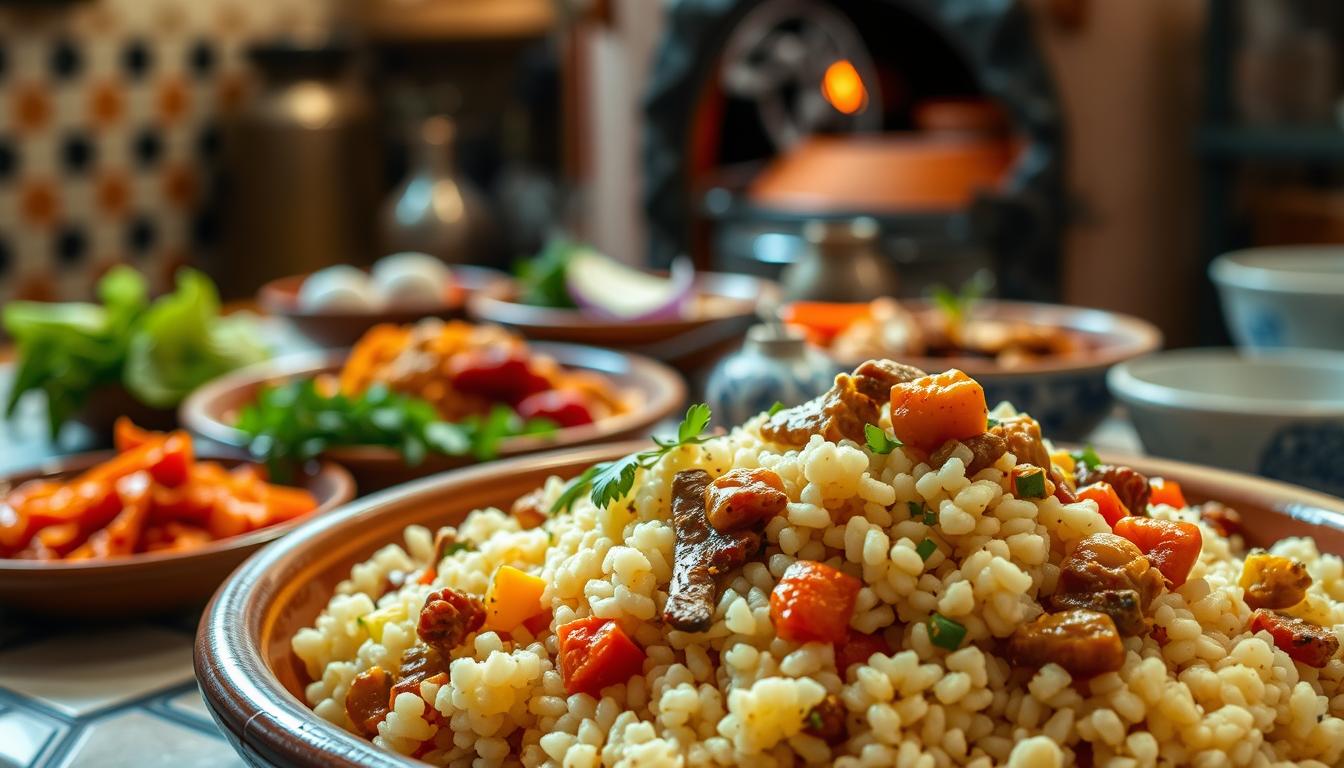
Couscous is used in many occasions, including holidays and family gatherings. It is a versatile dish that can be served with various types of meats and vegetables.
The Diversity of Moroccan Couscous and its Different Flavors
Couscous is one of the main dishes in Moroccan cuisine, known for its diverse flavors and preparation methods. This traditional dish is not only a daily meal but also part of special traditions and occasions.
Couscous with Seven Vegetables
Couscous with Seven Vegetables is one of the most famous types of couscous in Morocco. It is prepared with a variety of vegetables, adding multiple rich flavors to the dish. This type of couscous is rich in nutrients and served on many occasions.
Couscous with Milk (Seffa)
Couscous with Milk, also known as "Seffa," is a sweet type of couscous prepared with milk and sugar. It is often flavored with cinnamon and vanilla, making it a nutritious breakfast meal loved by children.
Couscous with Acorn (Tfaya)
Couscous with Acorn, or "Tfaya," is a traditional dish prepared with caramelized onions, raisins, and meat. This type of couscous is distinguished by its unique and distinctive flavor and is considered a special dish in some Moroccan regions.
Regional Variations in Couscous Preparation
The preparation of couscous varies from one region to another in Morocco. Some regions add special spices or local ingredients, reflecting the country's cultural and culinary diversity. For example:
- In some southern regions, cumin and red pepper are added.
- In mountainous areas, wild herbs are preferred.
- In major cities, couscous might be served with modern and innovative methods.
Spices and Herbs: The Secret to the Unique Moroccan Flavor
The secret behind the Moroccan flavor lies in the innovative use of spices and herbs. Moroccan cuisine relies heavily on these ingredients to create its delicious and diverse dishes.
Ras el Hanout: The Secret Spice Blend
Ras el Hanout is a traditional spice blend considered a secret of Moroccan cuisine. It consists of a variety of spices carefully selected and mixed in precise proportions. This blend is used in many main dishes.
Saffron, Cumin, and Turmeric in Moroccan Cuisine
Saffron, cumin, and turmeric are among the most used spices in Moroccan cuisine. Saffron imparts a distinctive color and taste to dishes, while cumin and turmeric are used to add depth and rich flavor.
Methods of Using Spices in Different Dishes
Spices are not only used for flavor but also to enhance the appearance of dishes. In Tagine, for example, spices are used in different ways to achieve the desired flavor.
Famous Spice Markets in Moroccan Cities
Moroccan cities are famous for their rich and diverse spice markets. In Marrakech, for example, visitors can explore a bustling market full of spices and herbs.
- Marrakech Market: Offers a wide range of spices and herbs.
- Fes Market: Known for its ancient history and availability of rare spices.
Moroccan Pastries and Mint Tea
Moroccan pastries and traditional mint tea reflect a rich heritage and deep-rooted traditions. In Morocco, mint tea is a daily drink consumed at all times and is an integral part of the culture and customs.
Mint Tea: Rituals and Traditions
Moroccan mint tea is not just a beverage; it is a social ritual that brings people together. The tea is prepared carefully and served in ornate teapots, symbolizing hospitality and generosity.
The Ceremony of Serving Moroccan Tea
Serving Moroccan tea is characterized by special rituals, where the tea is poured from a height to show generosity and hospitality. The tea is served in small glasses and drunk slowly, enhancing social interaction among those present.
Traditional Moroccan Pastries
Moroccan pastries are famous for their diversity and rich taste. Among the traditional pastries are: Sweet Pastilla (Briouat), Ghoriba, Chebakia, and M'hanncha. Each of these pastries has its own unique taste and ancient history.
Sweet Pastilla, Ghoriba, Chebakia, and M'hanncha
Sweet Pastilla is a pastry filled with almonds and sugar, while Ghoriba is made from flour, sugar, and butter. Chebakia are fried pastries coated in honey, and M'hanncha is a pastry made from semolina and honey. All these pastries are served on special occasions and are symbols of generosity and hospitality.
Moroccan Foods for Occasions and Holidays
During occasions and holidays, Moroccan foods stand out as a fundamental element reflecting Moroccan culture and traditions. These dishes are an integral part of the Moroccan identity and are specially prepared during these important events.
Distinctive Ramadan Dishes
During the month of Ramadan, many traditional dishes are prepared that form part of the holy month's traditions. Among these dishes are:
- Harira: A rich soup made with lentils, chickpeas, and tomatoes.
- Chebakia: Fried pastries sweetened with honey.
- Sellou: A traditional sweet made from roasted flour and nuts.
Harira, Chebakia, and Sellou
Harira, Chebakia, and Sellou are staple dishes on the Iftar table during Ramadan. Harira is served as a warm soup, while Chebakia and Sellou are honey-sweetened pastries served as desserts.
The Moroccan Eid Feast
On Eid al-Adha, a large feast is held where grilled meats are served, especially the sacrifice meat. This feast is an opportunity for family gatherings and celebration.
Traditional Foods at Weddings and Celebrations
During weddings and other celebrations, many traditional dishes are served that reflect Moroccan generosity and hospitality. Among these dishes are:
- Mechoui: Grilled meats served as a main course.
- Rfissa: A dish consisting of chicken, lentils, and onions.
- Msemen: Thin, flaky pancakes stuffed with meat or onions and spices.
Mechoui, Rfissa, and Msemen
These dishes are part of food traditions in Morocco during happy occasions. They are served as main courses and reflect Moroccan generosity and hospitality.
The Moroccan Food Experience: Table Etiquette and Traditions
Moroccan food is not just a meal; it is a rich cultural experience. In Morocco, food is an integral part of daily life and social interaction.
Eating with the Right Hand: An Inherited Tradition
In Moroccan culture, eating with the right hand is an inherited tradition. Using the right hand while eating is encouraged, as it is considered an important table manner.
Family Meals and Moroccan Hospitality
Meals in Morocco are often family-oriented and social. Shared dishes are placed in the center of the table, and everyone is encouraged to participate and interact.
Serving Food in Shared Platters
Food is served in large shared platters, promoting a spirit of sharing and communication among family members or guests.
The Ritual of Washing Hands Before and After the Meal
Among Moroccan table manners is washing hands before and after eating. Rose water or lemon is offered to perfume the hands and enhance personal hygiene.
The Moroccan food experience combines rich flavors and ancient traditions, making it a unique and enjoyable experience.
The Heritage of Moroccan Cuisine: A Cultural Treasure Transcending Borders
Moroccan cuisine is an integral part of Morocco's cultural heritage, blending various cultural and historical influences. This rich heritage is evident in dishes like Tagine and Couscous, which have become symbols of Moroccan culture.
The heritage of Moroccan cuisine is not just a collection of traditional recipes; it is a cultural treasure that transcends geographical borders. Its influences can be seen in other cuisines around the world, where recipes and techniques are exchanged.
As Moroccan cuisine continues to evolve, the question remains of how to preserve this rich cultural heritage. The solution may lie in documenting and disseminating traditional recipes while preserving traditional cooking methods.
Thus, Moroccan cuisine remains a cultural treasure that transcends borders, continuing to inspire chefs and seekers of authentic flavors worldwide.
FAQ
What is Tagine?
Tagine is a traditional Moroccan dish characterized by slow-cooking ingredients in a special clay pot.
What are the ingredients of Moroccan Couscous?
Couscous is a traditional Moroccan dish made from durum wheat semolina, steamed and served with various vegetables and meats.
What are the most important spices used in Moroccan cuisine?
The main spices in Moroccan cuisine include saffron, cumin, turmeric, and ginger, in addition to the secret "Ras el Hanout" blend.
How is traditional Moroccan tea prepared?
Traditional Moroccan tea is prepared by boiling green tea with sugar and fresh mint in a special teapot.
What are the famous Moroccan pastries?
Famous Moroccan pastries include Sweet Pastilla, Ghoriba, Chebakia, and M'hanncha.
What are the main dishes during Ramadan in Morocco?
During Ramadan, Moroccan cuisine is distinguished by dishes such as Harira, Chebakia, and Sellou.
How is food eaten in Morocco?
In Morocco, food is often eaten with the right hand, and dishes are served in shared platters.
What is the importance of the Couscoussier in preparing couscous?
The Couscoussier is a traditional pot used to prepare couscous, where the couscous is placed in the upper part and steamed.
What are the types of Moroccan Tagine?
There are many types of Moroccan Tagine, including Meat Tagine with Prunes and Apricots, Chicken Tagine with Olives and Preserved Lemon, and Fish and Vegetable Tagine.
How is tea served in Morocco?
Tea in Morocco is served in traditional ways, poured from a height to achieve the desired foam.
